Prevent Deer Damage on Your Property
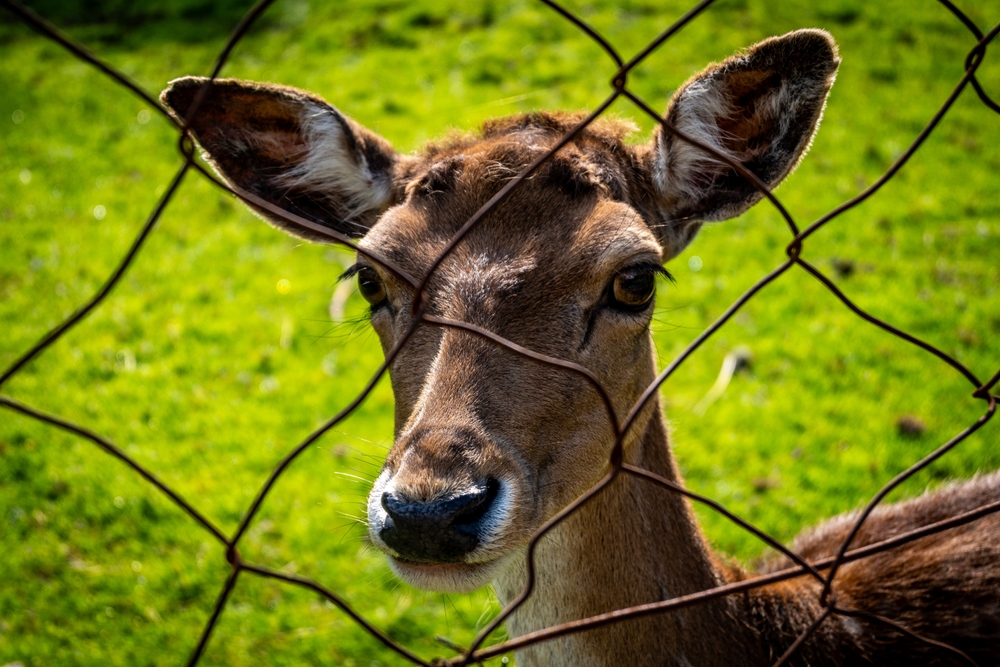
Damage to plants from wildlife comes in many forms. However damage from deer is one of the most prevalent in in rural areas, and Multnomah County is no different. Everyone living or working out in the country and has stories of some rose bush, raised bed or newly planted tree that was eaten or otherwise killed by deer. When it comes to farms and farmers, that damage effects livelihoods and can cost them tens of thousands of dollars every year. There are many ways to help prevent damage from deer—often people have to use more than one strategy to be effective at deterring them.
Identify Damage to Make Plans
While most will have seen the deer in action, it is important to identify the damage and use that to prioritize strategies. Torn or clipped leaves, shoots, and branches are indicators of browse, also called foraging. Bucks rub their antlers against trunks, damaging young trees. That type of damage is typically limited to a small number of trees and is typically very seasonal. If you suspect deer damage, looking for tracks and droppings can confirm that hunch.
Starting with Fencing
By far the most talked about form of preventing deer damage is through fencing. A well-built fence is the most reliable long-term way to protect crops from deer—though there are downsides, like cost. Fencing is often the most expensive option. Oregon Department of Fish and Wildlife (ODFW) recommends a woven-wire fencing at least 76 inches high. An adult deer can jump a 76-inch fence but generally do so only when chased by a predator. Finally, deer dislike small enclosed spaces, so using fencing garden plots can be very effective.
Electric fencing options
A cheaper alternative is using electric fence. It needs to be only 5 feet high as it relies more on the deer’s preference to slip between fence wires rather than jump them. Typically, after their first zap with a hot fence, deer will stay away from the fence and not attempt to jump it. According to ODFW specialists, the effect can be greatly increased by attaching a bait or lure, typically peanut butter, apples, or commercially made fence “scent caps,” to the hot wire. Curious deer will get a jolt to the nose when they investigate the fence. The deer won’t be injured and they will remember the shock.
For shorter-term protection—such as a temporary crop block or a seasonally vulnerable planting—an energized polywire or tape fence can be used. These are much cheaper but are not likely to last more than a season or two if left alone. Follow equipment instructions and safety requirements, and keep vegetation from shorting out the wires.
Caging important plants
For individual trees and shrubs—especially those effected by antler rub, “caging,” which is just a fence that surrounds the individual plant, can be very effective. If they are less they 5 feet tall, deer may still be able to munch on the top of the plant. Wrapping wire around the trunks of trees, can still protect the tree, even though it doesn’t discourage antler rubbing. Make sure to inspect those cages and wire each year to make sure they are not restricting growth. You can remove cages and wire around established and larger bushes and trees that are less likely to die even if damaged.
It all boils down to choosing the fence design based on the site, expected duration and maintenance the farm can realistically provide. Additionally, well-maintained fencing reduces the chance of wildlife entanglement: Inspect it after storms, fieldwork, and seasonal changes, and keep gates closed.
Hazing options for deer
If outright exclusion (through one of the above fencing options) is not an option, a multi-pronged strategy may include hazing and/or lethal take—meaning hunting. ODFW recommends that hazing, or scaring animals away, is a key first step in dealing with agricultural damage. Hazing can include:
- automatic deterrents: Motion-sensor deterrents such as lights or sprinklers,
- active engagement: caring or shooing away; blowing an air horn; discharging firearms nearby, spotlighting at night, or
- direct contact (pepper spray, slingshot, paintball gun).
Prevent animals from getting used to one technique by varying your hazing methods over time. Hazing can be time-consuming, as it should be done both day and night consistently—though with varied techniques—to be most effective.
When and how to consider hunting
When used in combination with hazing, hunting pressure can also be an effective tool to reduce agricultural damage. Landowners can enroll in the ODFW Landowner Preference Program (LOP) if you qualify. The LOP program provides hunting tags to private landowners that can be used on their own property. You can designate these tags for yourself, family members, or friends. Applications typically take 2-3 weeks to process, so be sure to apply well in advance of your intended hunt dates. Landowners can also find hunters with their own deer-hunting permit (called “tags”). If you don’t know any hunters, landowners can sign up for ODFW’s Hunt by Reservation Program.
A note on deer repellant products
Finally, it should be noted that while commercial repellents may reduce feeding on particular plants, they are not a substitute for exclusion where losses are serious. Their effectiveness varies, and applications may need repeating—especially as new growth appears or rain washes product away. Use only products labeled for the crop and site, and follow label directions for application, timing and harvest intervals.
Each new year means new deer
Review and adapt each season. A targeted, varied prevention program—built around the farm’s most vulnerable crops and maintained through the season—can reduce losses while keeping the rest of the operation practical to manage. For more information, here are some additional resources.
Additional Resources
Oregon Department of Fish and Wildlife: Living with Deer and Elk
OSU Extension: Establishing and Maintaining Streamside Buffers on Western Oregon Farmland
OSU Extension Solve Pest Problems: How to Manage Deer and Elk
Oregon Department of Fish and Wildlife: Deer entanglements with yard items increases during the holiday season; Take steps to reduce harm to wildlife