Planting for the Future: Adapting our Forests to Climate Change

It has been another warm winter and spring in the Pacific Northwest leading to low mountain snowpack (a third of normal levels) according to NOAA’s National Climate Report for February 2026. Our recent weather patterns continue trends we’ve seen for decades now – the climate is changing and it’s actively shaping our forests. Oregon’s climate is expected to get warmer on average, with hotter, drier summers and winters that feature bigger rain events. Mountain snowpack is expected to decrease and heat waves will likely become more frequent.
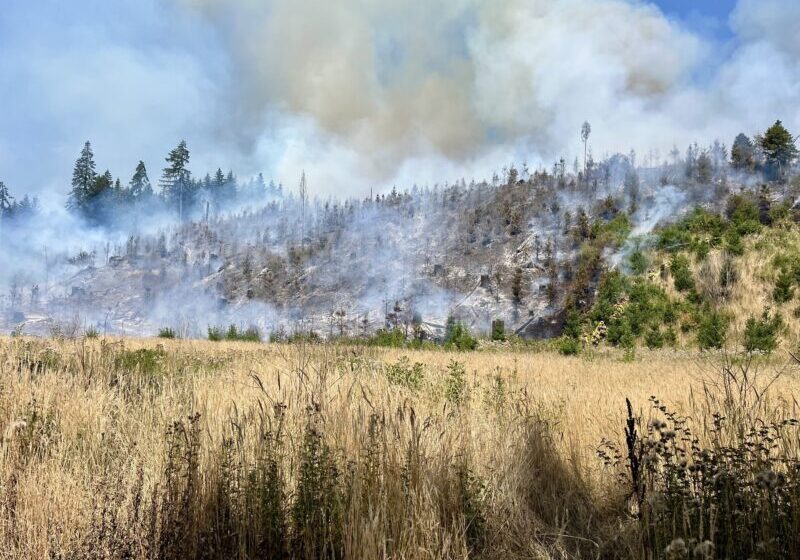
These trends aren’t projections; they’re already happening. Changes in weather have already been linked to worsening health for trees, like tree-scorching (like sunburn for trees) and accelerating the rate of tree deaths (especially of western redcedar, western hemlock, grand fir, and red alder). Other ways forests are impacted are increased wildfire risk, streams drying up earlier in the summer, and intense rain causing increased runoff that can easily overwhelm drainage systems and cause landslides. Scientists have also observed increases in the presence of forest pests, diseases, and invasive species (both plant and animal). The ways that all these factors interact in a given location is impossible to predict.
By making careful observations of changes and practicing adaptive management, you will better know your land and be able to create conditions for forest health and climate resilience.
Above, a forest property with dead western redcedar, a sign of the times.
Symptoms of Climate Change – What to watch for in your forest
My trees are dying!
One of the most prevalent signs that climate change is affecting a forest is the seemingly sudden die-off of certain trees. Scientists and landowners both have observed western redcedar, grand fir, western hemlock, and red alder to not be doing as well overall. Although Douglas-fir is currently still doing well in the Portland region, it has been observed ailing and even dying in some areas lower in elevation and farther south.
These tree species are historically adapted to the cool wet climate of the Pacific Northwest Coast temperate rainforest ecosystem. As summers have become hotter and drier, with longer stretches without consistent rain, these trees are dying from droughtDrought A longer than normal time with not enough rain stress.
As trees become more drought-stressed, they also become more susceptible to pests and diseases which can accelerate their deaths. Rather than being the primary cause of a tree’s death, pest infestation or diseases can be a secondary cause. Another way to think about secondary causes would be how someone with a compromised immune system can end up dying from a smaller ailment like the flu.
Unprecedented ice storms in recent years have also led to ice damage, especially in red alder. The trees are left with small canopies which limit their ability to photosynthesize. Broken limbs can also serve as an entry point for diseases and pests.
I see blackberry (or other unwanted weeds like scotch broom or Canada thistle) where there used to be trees.
Once significant patches of trees die in a forest stand, it can allow enough light to reach the forest floor for sun-loving weeds to thrive. These weeds tend to grow thickly and quickly, which prevents new tree seedlings from growing and becoming healthy adult trees. If left unchecked, this can lead to a negative feedback loop of increasing ecological degradation.
Finding Solutions
There are many considerations landowners can make in response to extreme weather events and a changing climate. By taking steps to proactively embrace “climate-smart forestry,” forest owners can make valuable contributions toward mitigating climate change and adapting to a changing landscape. Adapting our forests to climate change is uncharted territory, and no one has all the answers.
However, forest managers are already considering or trying strategies to help future forests be more resilient to climate change.
We explain tested/conventional approaches in numbers 1 – 7. More experimental approaches with greater risk of failure or unintended consequences are described in 8 – 9.
1. Promote soil health:
Healthier soil stores more carbon, retains more water, and promotes healthier trees. Encourage diverse microbial (especially mycorrhizal) communities by retaining older trees, promoting biodiversity of plants and animals, and keeping the soil covered with plants. Minimize soil disturbance and compaction. Value plants such as red alder that can fix nitrogen or otherwise boost soil fertility.
2. Promote forest complexity:
Manage forests to encourage a diverse mix of tree species, tree ages, and understoryUnderstory The area under and around trees vegetation. This diminishes the chance of disease outbreaks and increases the odds that forest habitat will persist even if a few species decline.
3. Let trees live longer:
Allow trees to grow larger/older before harvesting them. Since older forests are more efficient at sequestering carbon dioxide and producing large volumes of timber than young forests, this will remove more carbon from the atmosphere, storing it within the trees, soil, and wood products eventually made from those trees. This article by Northwest Natural Resource Group (NNRG) explains this concept well.
4. Use thinning thoughtfully:
Thin forests to a slightly lower density than the historic guidelines suggest for your forest’s average diameter range. This leaves a bit more moisture available in the soil for the remaining trees. Be careful not to thin too widely though, which would allow too much sun and drying winds to reach the understory and soil and dry the soil out more.
5. Prevent Pest & Disease Outbreaks:
Manage forests to minimize the risks and impacts of disease, insect pests, and invasive species.
For example, to avoid triggering a Douglas-fir beetle outbreak, don’t leave large wind-thrown or cut Douglas-fir (>10” diameter) logs on the ground past the first April following when they came down. Or, use MCH beetle repellant if you can’t remove the logs. While the approaches for maintaining overall forest health listed in 1-4 above should minimize impacts from pests and diseases, there are specific guidelines that are important to know for each tree species in your forest. It’s wise to read up on potential pitfalls of any management activities you’re planning for each tree species you manage. Learn more from the Oregon Department of Forestry’s Forest Health Unit.
6. Maintain roads with drainage in mind:
When replacing road culverts, be sure to choose a size that can handle increased volumes of rain runoff. For culverts that cross perennial streams, replace them with a bridge if feasible.
7. Select drought-tolerant plants:
Plant more drought-tolerant locally native tree species*. These include Willamette Valley ponderosa pine (Pinus ponderosa var. benthamiana), Douglas-fir (Pseudotsuga menziesii), Oregon white oak (Quercus garryana), and Pacific madrone (Arbutus menziesii). Note that these species require full sun to thrive and are not appropriate to plant in a forest understory. Unfortunately, most of our shade-tolerant tree species are those suffering from climate change. Although difficult to find at nurseries, Pacific yew (Taxus brevifolia) could be a more drought-tolerant understory tree species to try planting more of.
8. Try assisted population migration:
Choose seedlings of locally native tree species* whose genetic stock is from farther south (i.e. their seeds were collected from adult trees naturally growing farther south). For Multnomah County, consider genetic stock from central to southern Willamette Valley, Umpqua Valley, and Rouge Valley regions of Oregon, or even far-northern California. This requires checking with nurseries to see what seedling stock they have available and selecting the correct seed zones and elevation ranges.
Note that these varieties may not be as tolerant of cold / freezing temperatures or the moisture levels we currently experience, so it’s advisable to only plant a portion of your planting area with them (20-25%).
9. Try assisted species migration:
Integrate some tree species that are not native to the Portland area but are native to nearby ecoregions with slightly hotter and drier climates. This practice is called assisted range expansion for species with ranges bordering our local region and assisted species migration or assisted long-distance migration for species with ranges farther away from our region beyond the limits of natural dispersal.
Proceed with caution once you’ve done research on a tree’s environmental preferences and limitations and have ensured the nursery providing the seedlings has taken precautions to avoid spreading diseases like sudden oak death. See the table below for some possibilities.
As noted in #8, these species may not be as tolerant of cold/freezing temperatures or the moisture levels we currently experience, which could lead to ice damage and other health issues. It’s therefore advisable to only include a portion of your planting area with them (~20%) if choosing this strategy.
| Native Region | ||||
| Tree Species | Willamette Valley | Southern Oregon | Far northern California | Eastern Oregon |
| White alder (Alnus rhombifolia) | X | X | X | X |
| Incense cedar (Calocedrus decurrens) | X | X | X | X |
| California black oak (Quercus kelloggii) | X | X | ||
| canyon live oak (Quercus chrysolepis) | X | X | ||
| Coast redwood (Sequoia sempervirens) | X | X | ||
(Bold indicates where the tree’s range is concentrated if multiple regions are selected)
* We are using “locally native species” several times instead of just “native species” to emphasize the difference between trees native to the Portland region, vs. trees native to Oregon more generally. A full list of locally native trees can be found in the Portland Plant List, 3.1-1 – 3.4-2.
Related Posts