

by Michelle Delepine, Conservationist & Invasive Species Program Coordinator, and Shahbaz Khan, GIS & Conservation Technician
Our early detection, rapid response (EDRR) program seeks to locate and control high-priority weeds—as defined by our Early Detection, Rapid Response (EDRR) species list. The goal of this program is to detect these weeds and manage them strategically to contain their spread and reduce their impacts to the ecosystem. Staff visited 410 properties this past year and surveyed over 3,600 acres! This includes 1,200 acres of private property and another 2,450 acres along the Multnomah Channel, by boat. We also surveyed another 20 acres of shoreline around Sturgeon Lake, on Sauvie Island, by drone. On private property, our top priority weeds were garlic mustard, knotweed, and spurge laurel. Along shorelines, we looked for aquatic weeds such as common reed, water primrose, and purple loosestrife.
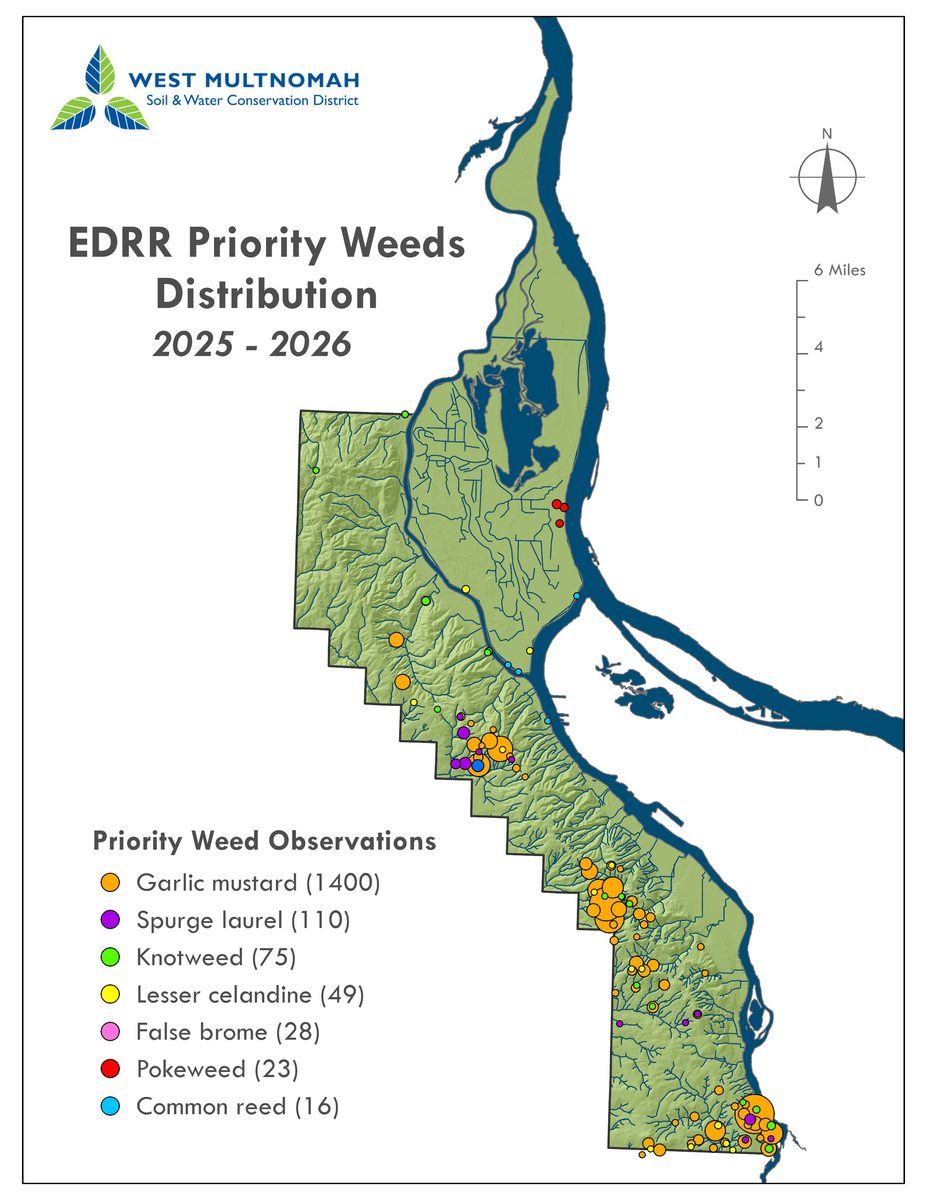
We found seventeen different priority species from our EDRR list (see Figure 1.). The next step is controlling them carefully following best management practices—such as manual removal or targeted herbicide control. Some species are only managed in priority watershedswatershed an area of land that channels rainfall, snowmelt, and runoff into a common body of water, such as a nearby lake or river. Multiple streams can be part of the same watershed area, such as the Tryon Creek Watershed which is fed by Oak Creek, Park Creek, Falling Creek, and others. or geographic areas. Lesser celandine, for instance, is considered an “EDRR species” on Sauvie Island, but generally not elsewhere in our district. The table below (Figure 1) lists the weed species we found and controlled during our surveys. In all, we identified 8.3 acres of weeds. While this is a low number in comparison to the acreage we surveyed, it is consistent with what we expected since we are only targeting weeds that are still relatively rare/sparse on the landscape. This metric also shows that we are successfully managing the abundance of target weeds in our District.
| Name of Weed | # of Patches | Total Size of Patches (sq ft) |
| Garlic mustard | 1400 | 202164 |
| Spurge laurel | 110 | 33495 |
| Knotweed | 75 | 30553 |
| Lesser celandine | 49 | 21101 |
| False brome | 28 | 8165 |
| Pokeweed | 23 | 269 |
| Italian arum | 20 | 3142 |
| Common reed | 16 | 6365 |
| Orange hawkweed | 15 | 1513 |
| Ludwigia spp | 12 | 2829 |
| Purple loosestrife | 7 | 10071 |
| Three-cornered leek | 6 | 28850 |
| Wild chervil | 6 | 3550 |
| Oblong spurge | 5 | 3180 |
| Indigo bush | 5 | 800 |
| Milk thistle | 3 | 3252 |
| Meadow knapweed | 1 | 5 |
Figure 1. Table: EDRR Species Found (July 2025 – June 2026)
Our top EDRR weed species include the seven species listed in Figure 2. below. Garlic mustard continues to be one of our most targeted species. That said, we are noticing improvements on the landscape. In general, there is far less cover of garlic mustard in areas where we have been managing it. This finding is a mark in success in meeting our goals of the EDRR program.


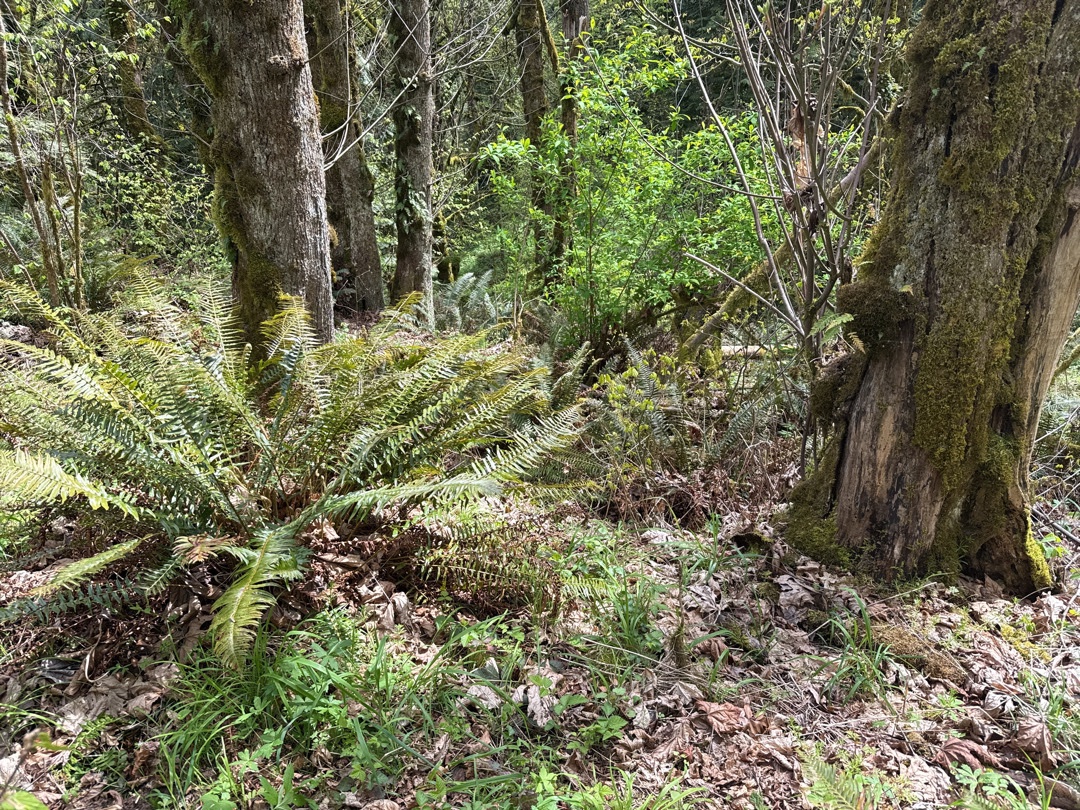
Figure 3. shows the comparison of a garlic mustard patch in 2025, prior to control, and again in 2026. This past year we found no garlic mustard at all at 119 properties where it used to be present! In this particular image, you cab see that garlic mustard was much less present at a site in the headwaters of Balch Creek in 2026, compared with 2025.
Special Thanks
Special thanks to the Oregon State Weed Board (OSWB) grant program which partially funds our garlic mustard effort, along with the efforts of several land stewardship partners across the Portland area. In 2026, we were awarded $54,091 in funding from the OSWB grant program to support this ongoing, important effort to contain and decrease the presence of garlic mustard in Portland to prevent the spread of garlic mustard to areas outside the Metro area.
Also of note, is that I was honored to receive the “Outstanding Government Partner Award” through the Oregon Invasive Species Council, for fostering regional collaboration and cross-jurisdictional partnerships. We are grateful to receive this recognition!