
by Eleanor Greene, outreach and communications coordinator
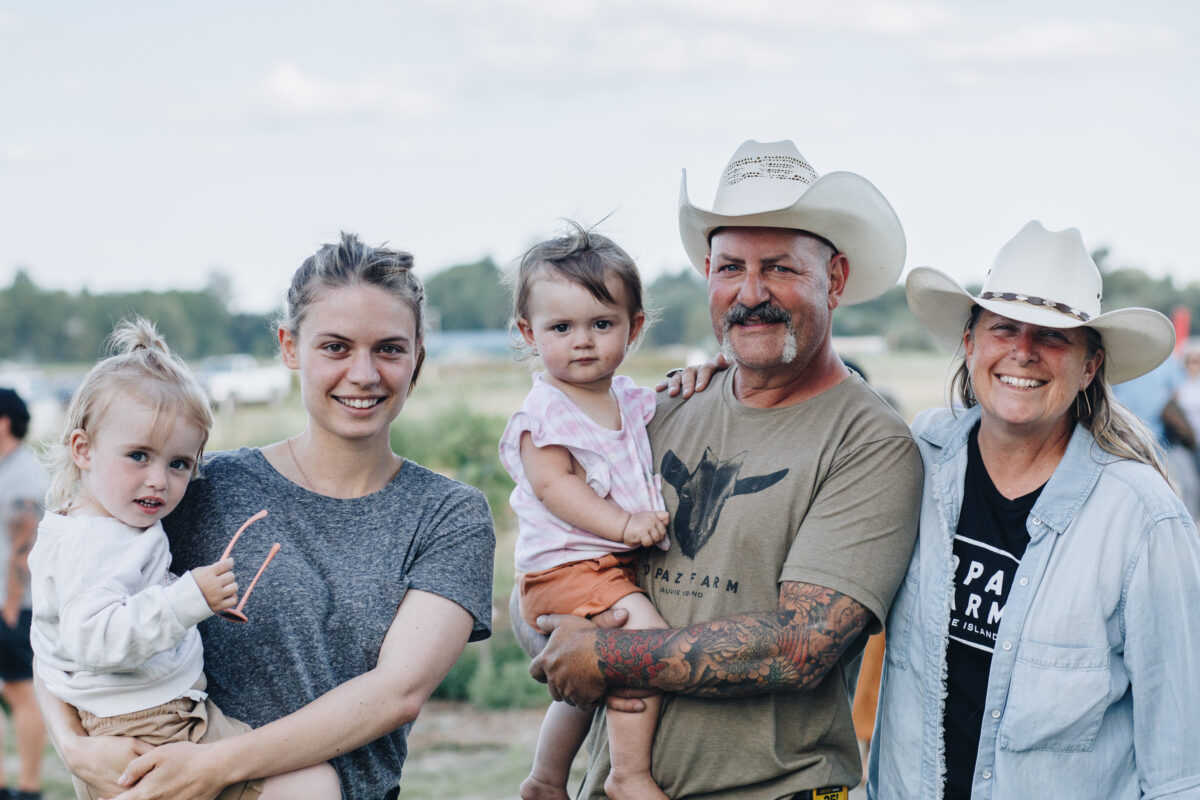
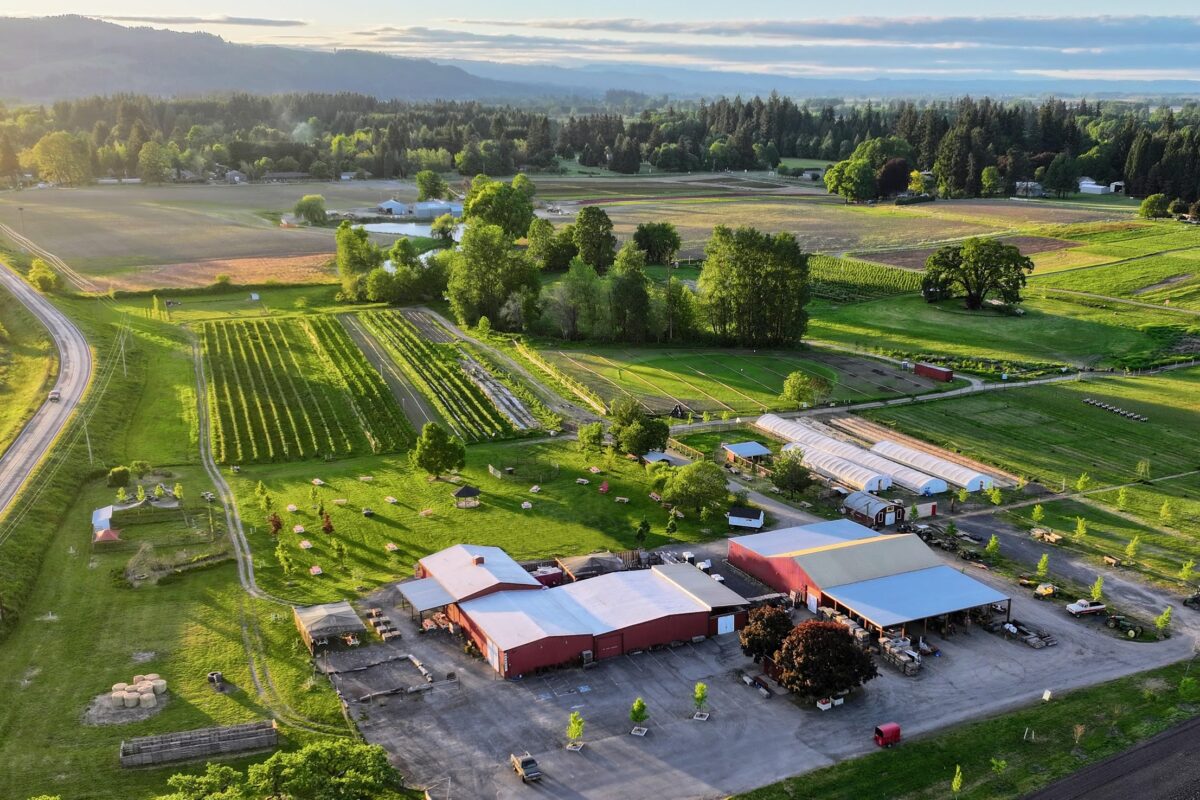
You may have seen the billboard for Topaz Farm when you’re driving up Highway 30 toward Sauvie Island. You may have been there for berry picking, or a concert. If you’ve met Kat, she’s probably wearing a western (cowboy?) hat, a button-down shirt, and a big smile. Even though she seems perfectly at home and comfortable on her farm, it’s a relatively new journey for her.
Let’s Buy a Farm
Kat moved to Portland in the ‘90s after a road trip, she never went back to the east coast. She lived on a boat, met her husband, Jim, had a family and made a life here, spending as much time on the rivers in her kayak as possible. As Kat and Jim tried to decide what they’d do in the retirement chapter of their lives, Kat wanted to be even more embedded in the area.
“We felt so connected with the island. From the moment you drive over the bridge, your shoulders drop a little lower. No matter where we live, we need to be connected to nature. We started saying, ‘what could we do so that we never leave the island?’”
Then the opportunity came to buy Kruger’s Farm on Sauvie Island. Kat and Jim jumped at the chance. Kat knew that as a farmer, she wanted to avoid synthetic fertilizers and pesticides.
“It’s pretty impossible, even when using chemicals, to have a farm not have crop failures and not have issues.”
Asking for Help
Topaz Farm’s first year to farm the land was 2020; they dealt with COVID-19, unrest in Portland, wildfire smoke, deer who loved (and decimated) their strawberry crop, and invasive yellow nutsedge (Cyperus esculentus) that was spreading from cranes visiting the island. Kat and Jim were overwhelmed new farmers, working 100 hours a week. They were getting a lot of advice from other farmers, and from community partners that they donated parts of the farm to use. Kat remembers when the Sauvie Island Center (a West Multnomah SWCD partner) came to visit, its staff pointed out poison hemlock Kat hadn’t known how to identify, and told her to call the District.
“I immediately called the Soil and Water Conservation District. And it was, right away, ‘here’s some material, here’s what you need to know,’” Kat says. “You ask five farmers how to do something, you’re going to get five answers, and it doesn’t mean that any of them are wrong. So, it’s great to have the Soil Water Conservation District, to be able to call to talk these things through, or I’d even get responses back from multiple folks there, saying ‘sorry for the delay, but we were all trying to figure this out.’ With other agencies, it’s not the same.”
Kat explains she was interested in running for the District’s board for many reasons—the same reasons she is involved in Bird Alliance of Oregon, the Sauvie Island Community Association, and attends meetings for the Sauvie Island Drainage Improvement Company—to help advocate for small- and mid-sized farmers, understand and help others understand the holistic and interconnected nature of tending to land.
“SWCDs are extremely helpful whether you’re a conventional farmer, regenerative farmer, or organic farmer. I think it helps because people can go there for resources. They can go and ask for help. There isn’t this fear of like, ‘I’m going to get turned in, because I don’t get this right.’ That’s one big strength,” Kat said, emphasizing the benefit to constituents that West Multnomah SWCD and other SWCDs are not and have never been law-making or law-enforcing agencies. Our staff is simply around to offer technical advice and assistance.
Spreading the Word
In her professional background as a graphic designer, before she became a farmer, Kat was always helping people market their products and to get information to people. She hopes to be able to help the District do that with our knowledge and information, if in a different way.
“For [WMSWCD] to be there and help us so much, it was my place to give what I could to help them,” Kat says. “The more I’m with [District staff], I realize there is a treasure trove of knowledge. I personally would like to find a way to get more of that knowledge out to people. That excites me, because I feel like maybe there’s a way I can be of help.”
Not many people would consider the amount of work Kat and Jim do to be called retirement. But their work at Topaz Farm has engaged so many, with their berry picking, summer concerts, and corn mazes, no doubt bringing even more people that deep island exhale that inspired it all.